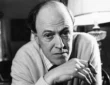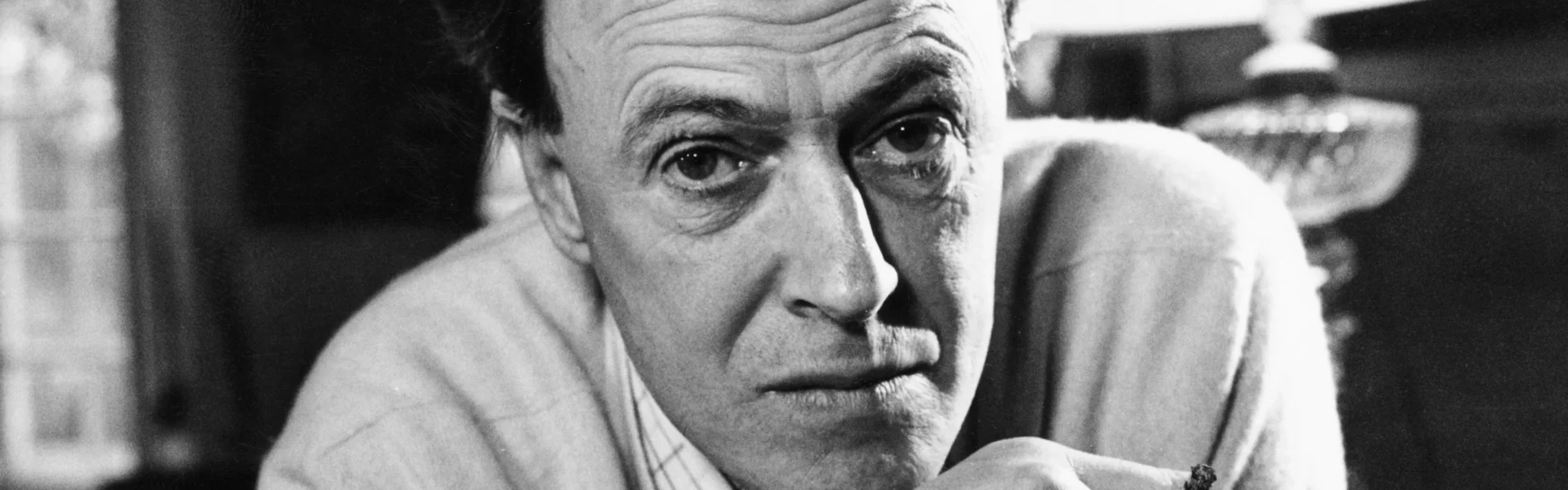

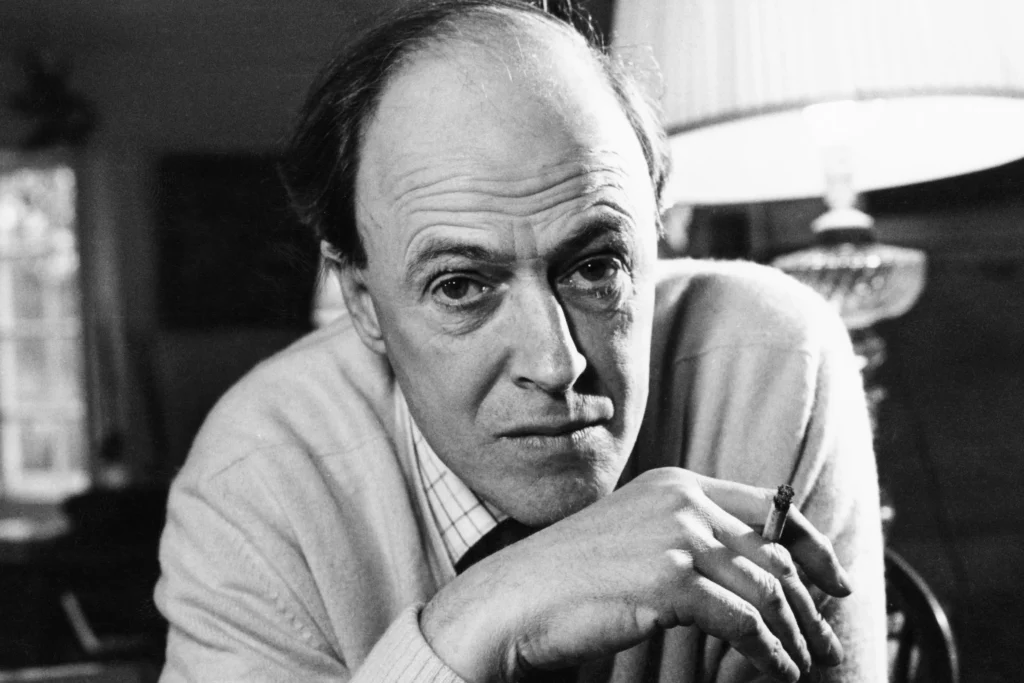
Roald Dahl was a British novelist, short story writer, poet, and screenwriter who became one of the best-selling children’s authors of the 20th century, and whose earlier life included service as a World War II fighter pilot and a stint as a British intelligence officer in wartime Washington.
Best known for Charlie and the Chocolate Factory and Matilda, his books have sold more than 300 million copies worldwide, even as his legacy has become more complicated in recent years due to controversy over antisemitic remarks he made during his lifetime.
Profile
| Full Name | Roald Dahl |
| Date of Birth | September 13, 1916 |
| Date of Death | November 23, 1990 |
| Age at Death | 74 |
| Birthplace | Llandaff, Cardiff, South Wales, U.K. |
| Nationality | British |
| Occupation | Novelist, short story writer, poet, screenwriter |
| Parents | Harald Dahl (father), Sofie Magdalene Dahl (mother) |
| Siblings | Astri, Alfhild, Else, and Asta (full sisters); Louis and Ellen (half-siblings from his father’s first marriage) |
| Spouse | Patricia Neal (m. 1953–1983, divorced); Felicity “Liccy” Ann Crosland (m. 1983–1990, his death) |
| Children | Five with Patricia Neal, including Tessa Dahl and Ophelia Dahl |
| Net Worth | No verified net worth figure at time of death is currently available; his literary estate, including the Roald Dahl Story Company, was sold to Netflix in 2021 for a reported sum exceeding $500 million. |
Early Life
Roald Dahl was born on September 13, 1916, in Llandaff, South Wales, to Norwegian parents, Harald and Sofie Magdalene Dahl, who had married in 1911.
He was the only son among several sisters, and also had an older half-brother and half-sister from his father’s first marriage. Dahl’s early childhood was marked by tragedy: his older sister Astri died of appendicitis when he was three, and his father died a short time afterward, leaving his mother Sofie to raise the family alone.
As a child, Dahl spent summer vacations with his grandparents in Oslo, Norway, and grew up speaking both Norwegian and English; he was named after Norwegian polar explorer Roald Amundsen.
Education
Dahl was educated at Llandaff Cathedral School and later at St. Peter’s and Repton School, moving between institutions in part due to his mischievous behavior.
After finishing at Repton, he declined his mother’s wish for him to attend university, choosing instead to seek work that would take him abroad.
Career
After school, Dahl joined an expedition to Newfoundland and later worked for Royal Dutch Shell in Tanzania (then Tanganyika). At the outbreak of World War II, he joined the Royal Air Force, training in Nairobi, Kenya, before becoming a fighter pilot.
He crash-landed in the Libyan desert in 1940 after being given incorrect directions, sustaining serious injuries including a fractured skull, and later flew further missions over Greece and Syria before being invalided home. He was subsequently posted to Washington, D.C., as an assistant air attaché, where he also worked covertly for British intelligence.
Dahl’s wartime writing career began with The Gremlins (1943), a story written for Walt Disney, and his first collection, Over to You: Ten Stories of Flyers and Flying (1946), drew directly on his RAF experiences.
He went on to write popular adult short story collections including Someone Like You (1953) and Kiss Kiss (1959), before turning to children’s fiction for his own children starting around 1960. James and the Giant Peach (1961) marked his breakthrough as a children’s author, followed by Charlie and the Chocolate Factory (1964), Fantastic Mr Fox (1970), The BFG (1982), The Witches (1983), and Matilda (1988), among many others.
He also wrote screenplays, including for Chitty Chitty Bang Bang (1968) and the James Bond film You Only Live Twice (1967), and adapted his own Charlie and the Chocolate Factory into the film Willy Wonka and the Chocolate Factory. Dahl received three Edgar Awards from the Mystery Writers of America — for best short story in 1954 and 1960, and for best television episode in 1980 for an installment of Tales of the Unexpected.
Awards & Nominations
- 1954 — Mystery Writers of America — Edgar Award, Best Short Story — Win
- 1960 — Mystery Writers of America — Edgar Award, Best Short Story — Win
- 1980 — Mystery Writers of America — Edgar Award, Best Television Episode (Tales of the Unexpected) — Win
Social Media
Not applicable to Dahl personally, as he died in 1990 before the rise of social media; the Roald Dahl Story Company and related literary brand accounts are managed posthumously by his estate and Netflix, which acquired the company in 2021.
Personal Life
Dahl married American actress Patricia Neal in 1953; the couple had five children, including writer Tessa Dahl and Ophelia Dahl, co-founder of Partners In Health. Their marriage lasted three decades before ending in divorce in 1983. Dahl then married Felicity “Liccy” Ann Crosland, who moved into the family home, Gipsy House, and remained married to him until his death. In 1990, Dahl was diagnosed with a rare blood disorder, myelodysplastic syndrome, and died from complications on November 23, 1990, in Oxford, England, at the age of 74. The following year, his widow established the Roald Dahl Marvellous Children’s Charity in his memory. In the years since his death, Dahl’s legacy has become a subject of controversy due to antisemitic statements he made in interviews and nonfiction writing during his lifetime; his family and estate issued a public apology for these remarks in 2020.
Net Worth
No verified net worth figure for Roald Dahl at the time of his death in 1990 is currently available. His literary estate and associated intellectual property, managed through the Roald Dahl Story Company, was acquired by Netflix in a deal completed in 2021 reported to be worth more than $500 million.
Publications
- The Gremlins (1943)
- Over to You: Ten Stories of Flyers and Flying (1946)
- Someone Like You (1953)
- Kiss Kiss (1959)
- James and the Giant Peach (1961)
- Charlie and the Chocolate Factory (1964)
- Fantastic Mr Fox (1970)
- Charlie and the Great Glass Elevator (1972)
- The BFG (1982)
- The Witches (1983)
- Matilda (1988)
- The Minpins (1991, published posthumously)
Conclusion
From wartime fighter pilot and intelligence officer to one of the most widely read children’s authors of all time, Roald Dahl’s imaginative, mischievous storytelling reshaped children’s literature, even as debate over aspects of his personal views continues to complicate his legacy today.